Modern hybrid cars combine engineering, electronics, and sustainability to deliver efficient and smart mobility.

By combining conventional engines with electric systems, hybrids deliver efficiency without sacrificing performance, redefining how automotive technology responds to global environmental and mobility challenges.
Below, Your Tech provides a brief yet comprehensive discussion of hybrid car technology, ranging from dual powertrain architecture, energy management systems, and regenerative braking, to the role of intelligent software and connectivity.
Dual Powertrain Architecture
At the core of hybrid vehicles lies a dual powertrain system that integrates an internal combustion engine with one or more electric motors. This architecture allows the vehicle to intelligently switch or combine power sources based on driving conditions.
During low-speed urban driving, the electric motor often operates independently, providing silent and emission-free movement. At higher speeds, the combustion engine takes over, ensuring sustained power and extended driving range.
This seamless collaboration improves fuel efficiency while reducing emissions. The system is designed to maximize each power source’s strengths, creating a balanced driving experience that feels smooth, responsive, and technologically refined.
Energy Management And Power Electronics
Advanced energy management systems act as the brain of a hybrid car. They constantly analyze speed, throttle input, battery charge, and road conditions to determine the most efficient power distribution in real time.
Power electronics, including inverters and converters, regulate the flow of electricity between the battery and electric motor. These components ensure stable voltage, protect critical systems, and enable precise control over energy usage.
Through sophisticated algorithms, hybrids optimize energy consumption without driver intervention. This intelligent automation enhances efficiency while maintaining driving comfort, proving how software and hardware work together in modern automotive design.
Regenerative Braking And Battery Technology
Regenerative braking is a defining feature of hybrid vehicles. Instead of wasting kinetic energy as heat, the system captures energy during braking and converts it into electricity to recharge the battery.
This recovered energy significantly improves overall efficiency, especially in stop-and-go traffic. Drivers benefit from reduced fuel consumption while contributing to lower emissions during everyday driving.
Modern hybrid batteries, often lithium-ion or nickel-metal hydride, are engineered for durability, safety, and fast charging. Continuous innovation ensures longer lifespans, lighter weight, and improved energy density.
Read Alos: Sports and Fitness Programs for Weight Loss
Intelligent Control Software And Connectivity
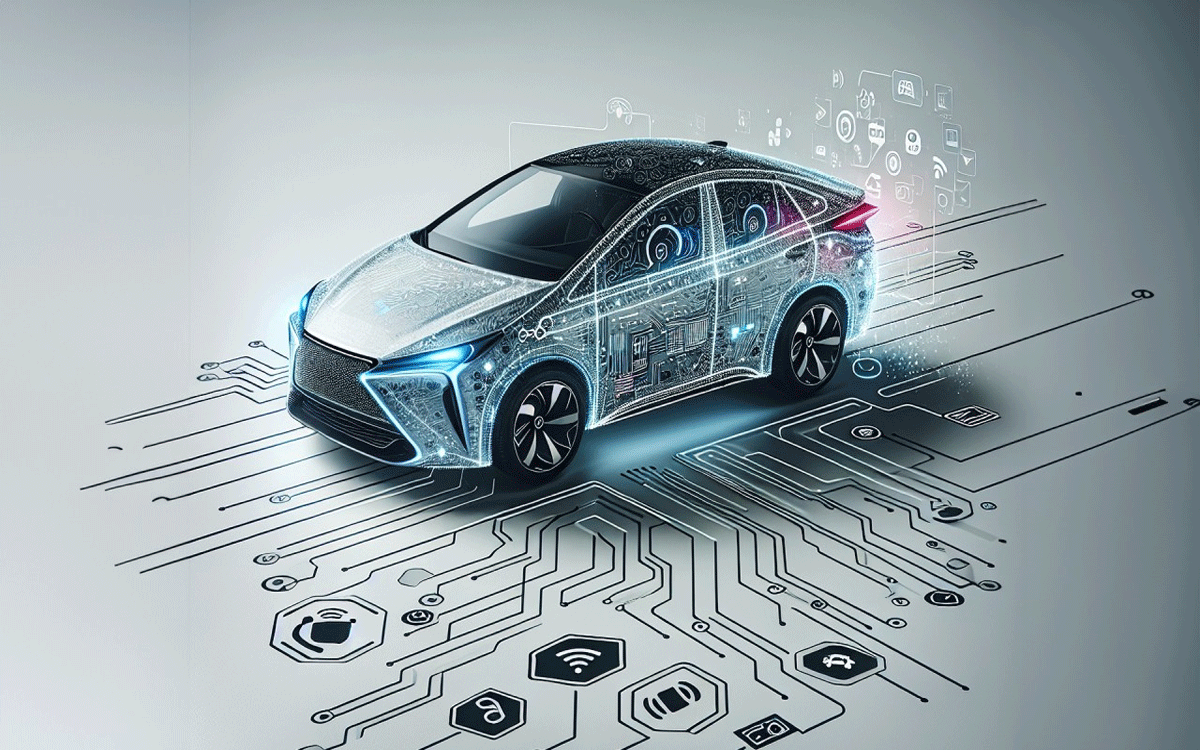
Hybrid cars rely heavily on intelligent control software to synchronize mechanical and electrical components. These systems manage transitions between power sources so smoothly that drivers rarely notice the changes.
Connectivity features allow hybrids to adapt to navigation data, traffic patterns, and driving habits. Some systems even learn driver behavior, adjusting energy strategies to improve efficiency over time.
This digital intelligence transforms hybrid cars into adaptive machines. Software updates and data integration ensure vehicles remain efficient, reliable, and aligned with the evolving expectations of modern drivers.
Efficiency Sustainability And the Road Ahead
Hybrid technology plays a crucial role in reducing fuel consumption and carbon emissions. By optimizing energy use, hybrids serve as a practical bridge between conventional vehicles and fully electric mobility.
Manufacturers continue refining hybrid systems to meet stricter environmental regulations while maintaining performance and affordability. These advancements make hybrid cars accessible to a broader range of consumers worldwide.
In conclusion, modern hybrid cars embody the future of automotive innovation. Through advanced engineering, intelligent systems, and sustainable design, hybrids prove that technological progress and environmental responsibility can move forward together.
Watch and stay tuned, don’t miss the most complete information about Your Tech.
Image Source:
- First Image: msluffy.com
- Second Image: id.linkedin.com